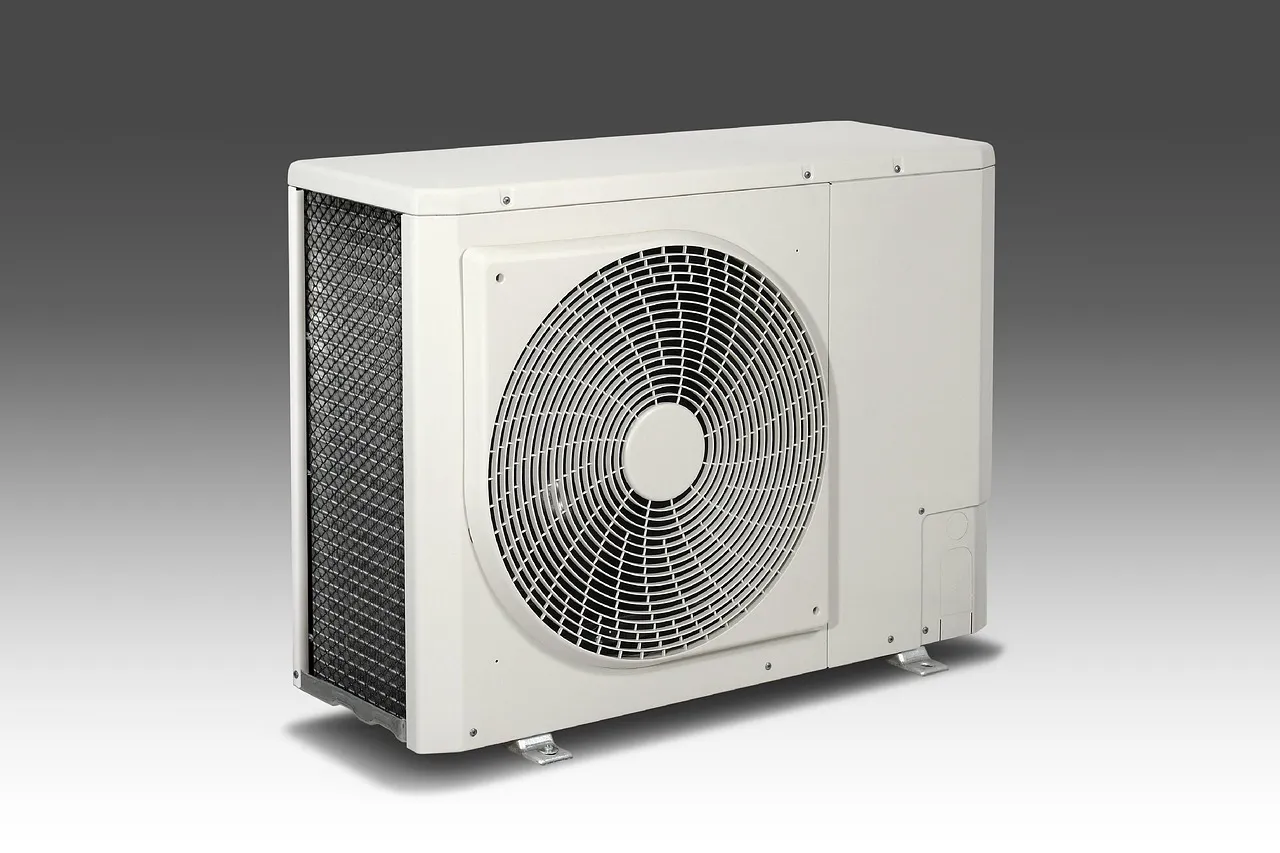
In Victoria, an air conditioner used for cooling should not be heard inside the home next door on weekdays before 7 am or after 11 pm, and on weekends and public holidays before 9 am or after 11 pm.
General informationDotto is not an acoustic consultant, an engineer or a noise regulator. Dotto holds no engineering registration. It does not measure, assess, test or reduce noise, and does not offer or arrange that work. This is general information, not advice. The hours below are as at the date of EPA Victoria’s page, which is linked at the foot of this page and is the place to check them.
The hours, row by row
EPA Victoria sets out Regulation 114 as a table of numbered groups, each with its own prohibited times. An air conditioner, evaporative cooler or split system used for cooling belongs to group 4. Group 3 holds home heaters, and among them it names central heating, hot water systems, and a heat pump, air conditioner or split system used for heating. The group, and with it the hour, follows what the machine is doing: on a weekday, group 3 should not be heard after 10 pm and group 4 not after 11 pm.
- VIC Air conditioner, cooling (group 4) Weekdays: not after 11 pm or before 7 am. Weekends and public holidays: not after 11 pm or before 9 am.
- VIC Air conditioner, heating (group 3) Weekdays: not after 10 pm or before 7 am. Weekend hours: in EPA Victoria’s row, printed below.
Hot weather, and what still applies
Victoria
EPA Victoria names two situations in which the prohibited times do not apply: equipment needed in an emergency, and an air conditioner run while a Department of Health heat health warning is current. Beside group 4, the table says that during such a warning an air conditioner may be used at any time.
The exception has a limit. A council officer can still assess an air conditioner’s noise as unreasonable during a heat health warning, where the noise has qualities that make it so. The same is true inside the allowed hours: unnecessarily excessive volume is EPA Victoria’s example of a quality that can make household noise unreasonable at any time.
New South Wales
New South Wales sets hours for air conditioners and heat pump water heaters; they are on the NSW EPA’s page.
Even away from the restricted hours, a council or the police may limit how these machines are used where they cause ‘offensive noise’.
One Saturday night, as an example
An example, not a real caseA split system cools a bedroom through a warm Saturday night, and it can be heard in the bedroom of the home next door. At 11.30 pm it is inside Victoria’s hours, and at 8.30 the next morning, a Sunday, it still is, because they run until 9 am on weekends and public holidays.
Had a heat health warning been current, the hours would not have applied, though a council officer could still have assessed the noise as unreasonable.
Elsewhere
EPA South Australia prints no hours for air conditioners. Its page counts noise from them among the everyday nuisances councils manage, and its table of who handles what files them under domestic machine noise from fixed machines. Tasmania’s Regulations include heating and cooling devices among the sources with prohibited hours, and the ACT works by decibels rather than hours; both have their own guide.